
On 21 June 1809, 800 men, 85 wives and 100 children of the 2/58th set sail from Portsmouth for Portugal in a convoy led by HMS Champion. They took a direct route down the Channel and then across the Bay of Biscay. On board, lower decks were hot and close in summer, mess tables and hammocks were slung in tiers, soldiers were largely idle between meals and short bouts of exercise on deck, wives and children were allotted reduced rations, while the Atlantic filled “a lower deck full of seasick land-lubbers” when the wind was up. In fair weather, the passage could be “a very good run” of little more than a fortnight; on this occasion, the convoy was off the mouth of the Tagus river by 2 July 1809.
Their confidence for what lay ahead would not have been boosted as they passed sea fortifications being dismantled. As early as March 1809, General Sir John Francis Cradock, the British commander in Portugal, had around 10,000 men under command, a figure that soon exceeded 16,000. Despite this, he had maintained a defensive position and even begun pulling battalions back from exposed positions to the north and east, concentrating them in and around Lisbon. This was in contemplation of a possible evacuation, with heavy cannon being shipped out to weaken any future seaward defence should the forts fall back into French hands. Although they held the capital, of greater significance was whether the country was to be treated as a temporary peripheral station or as the base of a sustained continental campaign.
The arrival of Sir Arthur Wellesley brought that question to a point. He regarded Portugal, from the outset, as defensible by a combined British and Portuguese force of 20,000–30,000 against any French army short of 100,000, provided Lisbon and the line of the Tagus could be held, and upon that judgement the war in the Peninsula would proceed.
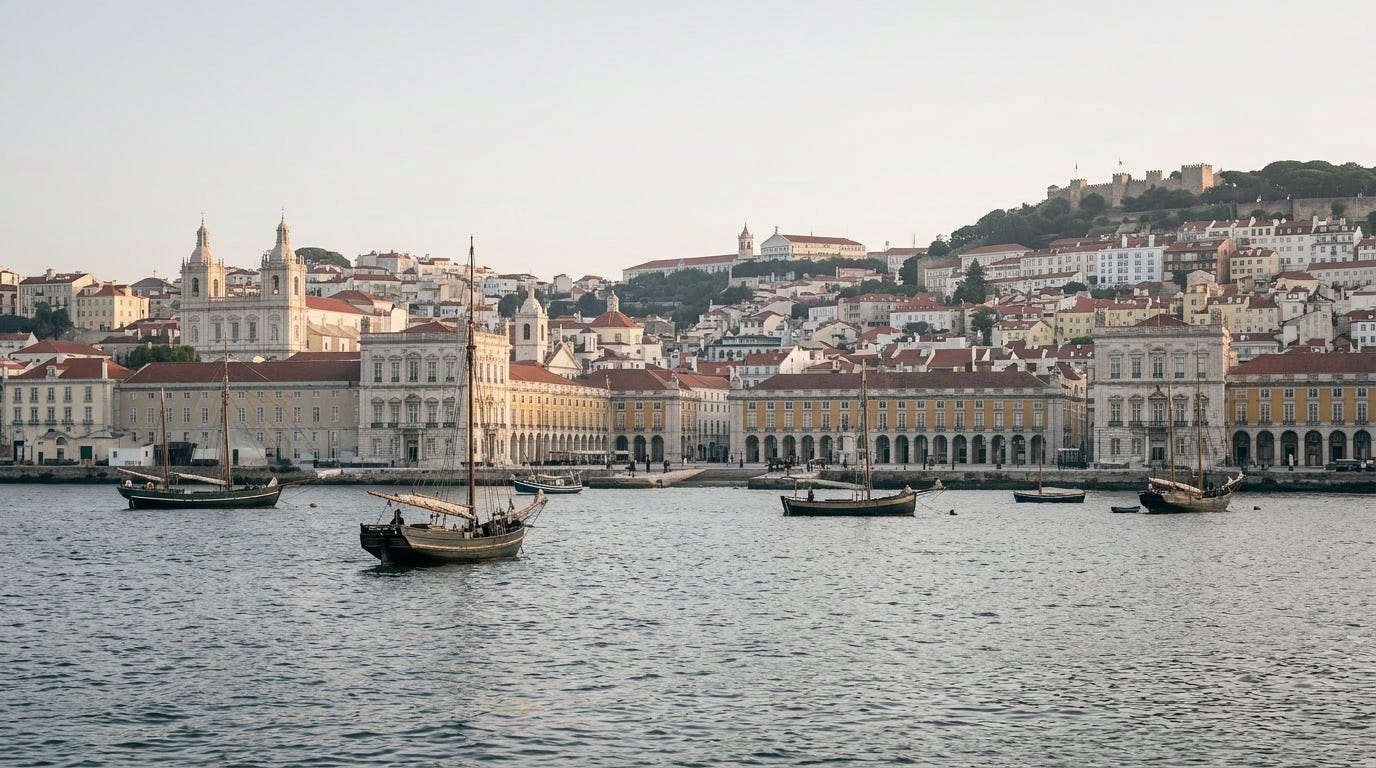
As the 2/58th disembarked on the north bank, they would have taken in a city climbing steeply from the quays, layering warehouses, churches and tiled houses that, in the preceding months, had witnessed the repeated embarkation and re‑embarkation of British cavalry, movements that had bred anger as much as fear in the inhabitants of Lisbon. The quarterly returns suggest that the 2/58th may have been spread across several ships, rather than any real loss in number en route. Gaps in the record are particularly apparent after the banal continuity of the Jersey years, making it difficult to track any individual soldier with absolute confidence. By September-December 1809, the 2/58th are recorded as being part of the Lisbon garrison with a marked increase in “Hospital” and “Absent sick”. For newly arrived battalions, the city was not merely a point of disembarkation but an immediate trial of climate, crowding and disease, with effective strength beginning to erode before any great action had yet been fought. Otherwise, garrison life followed the routine of parade grounds, guard mounting and sentry duty, but now against the language, law and civic order of a foreign capital.