
So walk on air against your better judgement
Establishing yourself somewhere in between
Seamus Heaney, The Gravel Walks (1996)
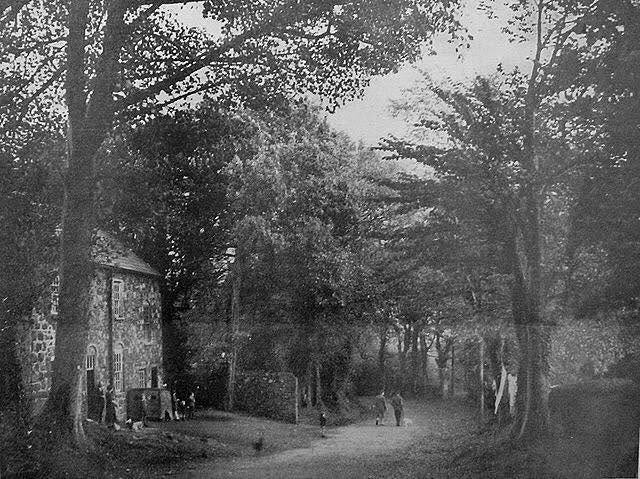
Around 1915, the family moved a few miles countrywards to Andersonstown. Their new home, Walmer, bore the name of the Kent castle where the Duke of Wellington spent his later years—an inheritance from the previous occupants, Walter M. Davidson, a Scottish Presbyterian printer, his wife and their five daughters.
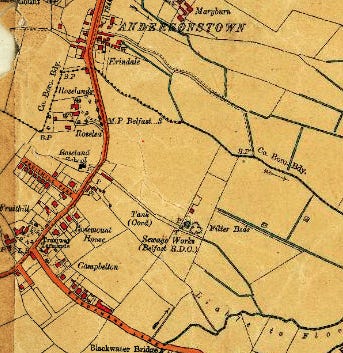
Next door, at Fruithill, lived George D. Coates, manager of the Northern Bank branch in Royal Avenue. On 10 March 1915, his nineteen-year-old son, Second Lieutenant George Washington Tate Coates of the Royal Field Artillery, was killed in action in France and is commemorated on the Le Touret Memorial. On the other side stood the manse of Broadway Presbyterian Church, then occupied by the Revd J. W. Gibson. The church building—down the Falls Road at the corner of Nansen Street—survives as the Irish-language cultural centre Cultúrlann McAdam Ó Fiaich. Towards town, at Tildarg, lived William Atteridge, the Royal Irish Constabulary’s district inspector for Belfast’s B District. Next door, at Ardmor, lived Joseph McGinley, a mineral-water manufacturer and justice of the peace whose business premises adjoined Clonard Picture House. This was the heart of aspirational Andersonstown.
A century later, Walmer still stands beside Falls Bowling Club, its semi-rural environs long since subsumed by the expanding city.